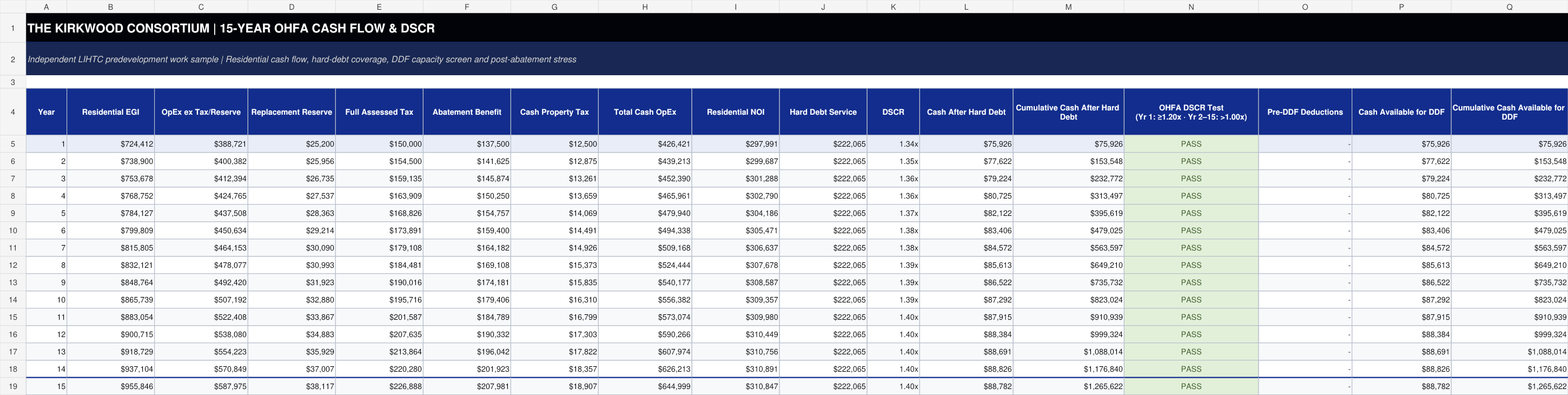
Year-1, annual minimum, and 15-year average controls are satisfied.
 THE KIRKWOODCONSORTIUMPut KC on a workstream
 ← Proof Hub15-Year OHFA
Work sample 02 · Operating underwriting
15-Year OHFA
Cash Flow & DSCR
A sanitized hard-debt coverage schedule that tests annual performance, separates mechanical deferred-fee capacity from a proven waterfall, and exposes the post-abatement cliff.
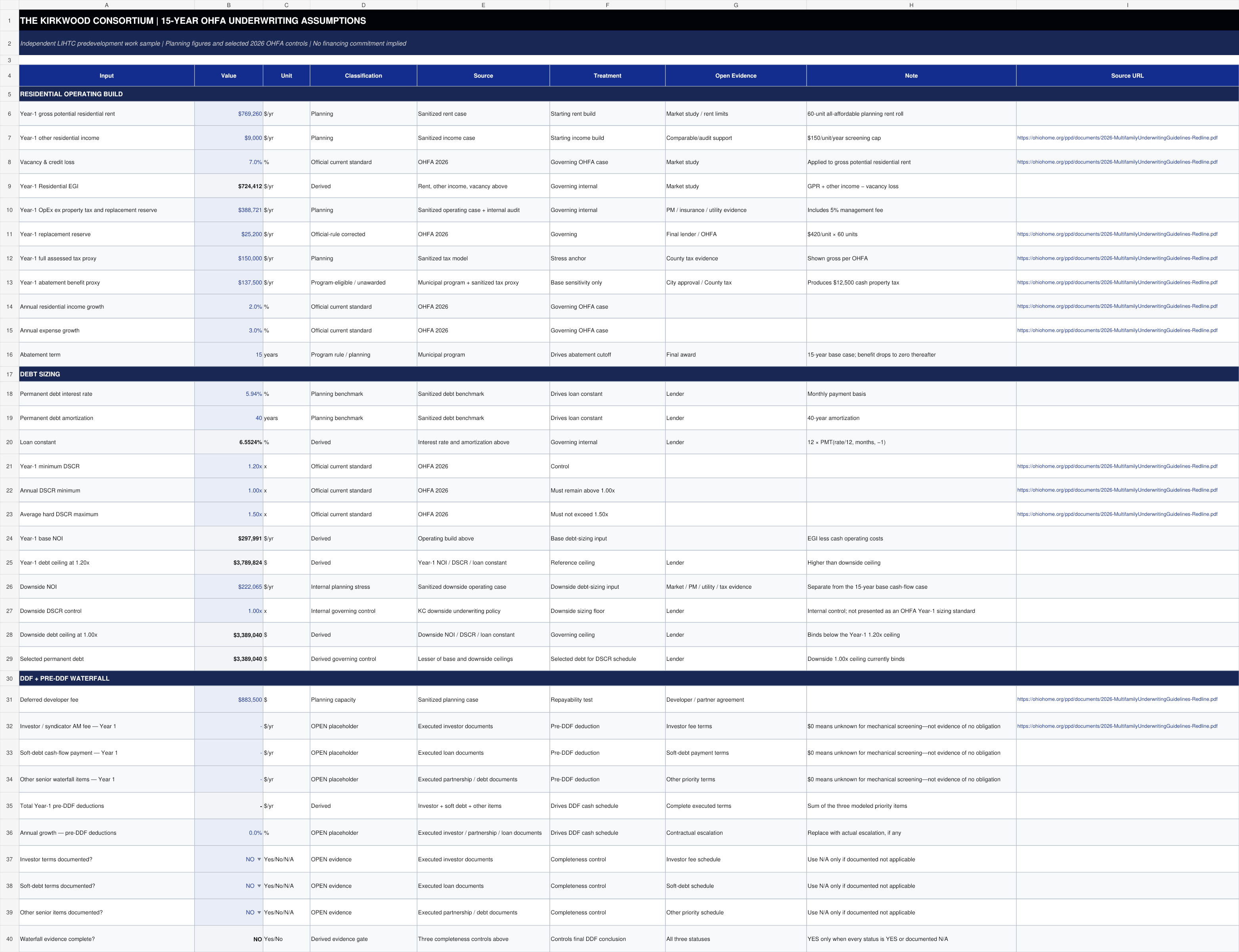
Selected permanent debt$3,389,040Below Year-1 debt ceiling
Year-1 hard DSCR1.34xFormula-linked test
15-year average DSCR1.38xPeak approximately 1.40x
Mechanical DDF reachYear 11Waterfall evidence still open
Year-16 post-abatement0.43xFail cliff
What the model does
Test coverage without overstating cash availability.
The schedule preserves the distinction between hard-debt DSCR and cash actually available to repay deferred developer fee. It can show mechanical capacity while withholding a final DDF conclusion until the partnership and soft-debt waterfall is documented.
- Applies 2% income and 3% expense growth assumptions
- Links all DSCR controls back to the assumptions sheet
- Calculates annual, minimum, average, and maximum hard DSCR
- Keeps the DDF conclusion open until waterfall inputs exist
Headline findings
Passing years can still conceal a structural cliff.
The selected permanent debt remains within the modeled hard-debt controls for the 15-year period. The independent Year-16 test shows why the abatement expiration belongs in the decision, not in a footnote.
$1,265,622 of cumulative modeled capacity versus $883,500 of DDF; actual waterfall remains open.
Modeled Year-16 NOI is approximately $96,393 and hard DSCR approximately 0.43x.
YEAR 15~1.40xAbatement benefit modeled
YEAR 16~0.43xPost-abatement stress
Live-deal application
Where this becomes useful to a developer.
The model can sit behind debt sizing, investor and lender review, funding applications, and closing updates while preserving the difference between a screening conclusion and a documented transaction conclusion.
- Reconcile underwriting assumptions across lender, investor, and agency models
- Maintain annual DSCR and downside tests as terms change
- Add soft-debt and partnership waterfall inputs
- Frame mitigants for abatement expiration and long-tail operating risk
Independent, sanitized predevelopment analysis prepared by John Kirkwood Jr. This model is a screening and demonstration tool, not an agency approval, lender underwriting, investor commitment, or representation of a closed transaction.